
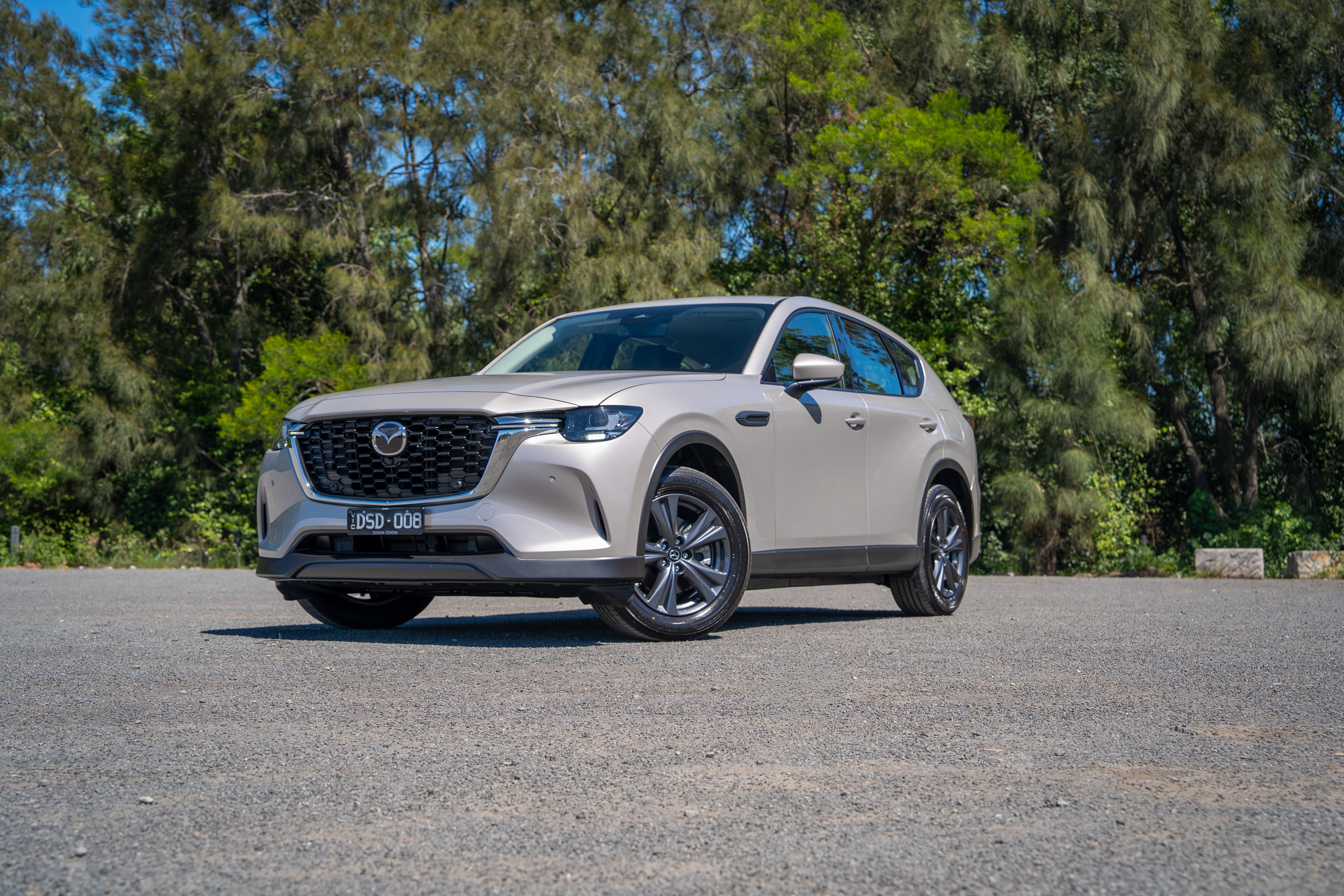
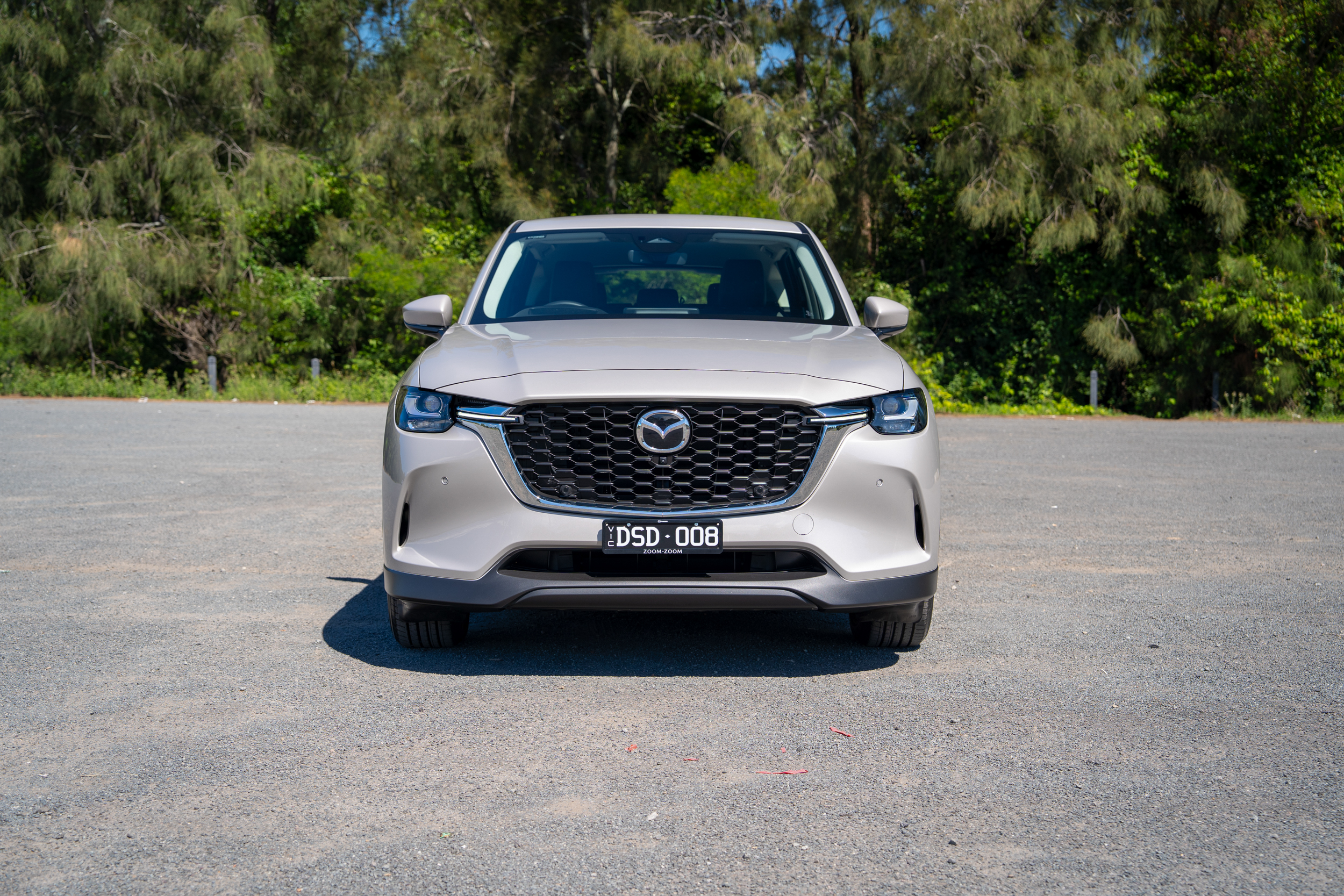
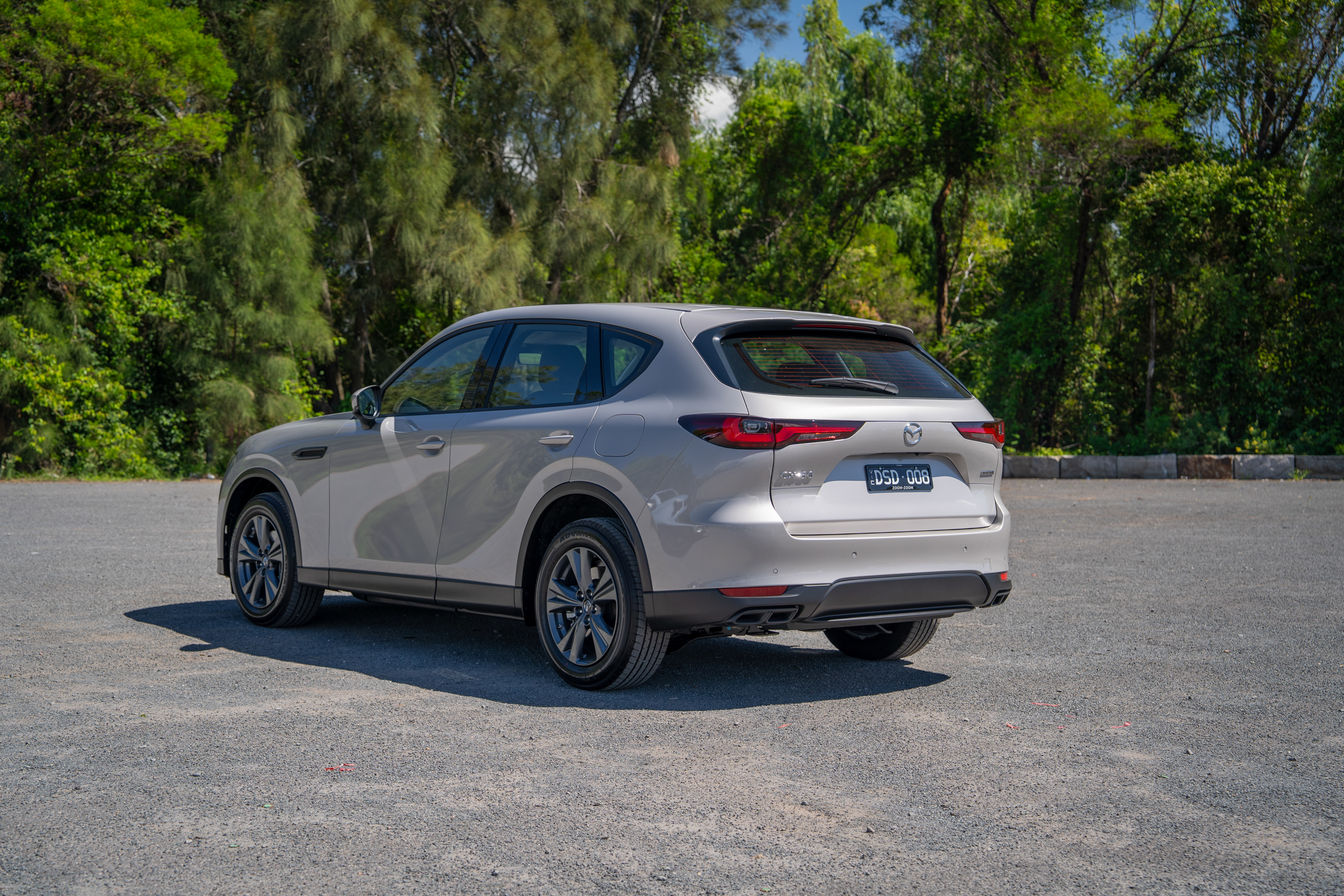
The Mazda CX-60 arrived in 2023 as the start of Mazda’s bold move upmarket, introducing a rear-wheel-drive-based platform and a range of inline six-cylinder engines designed to challenge premium European rivals.
But its launch wasn’t smooth.
Early versions were criticised for their firm ride, pricing, and lack of polish compared to established luxury SUVs. In response, Mazda rolled out major updates in 2025 including revised suspension tuning, improved refinement, price reductions, and a new entry-level four-cylinder model to broaden appeal.
Today, the CX-60 spans from the mid-$40,000s to over $80,000, positioning it between mainstream family SUVs and genuine luxury competitors.
In Short:
- Premium design and rear-wheel-drive platform deliver a more engaging drive.
- Strong inline six-cylinder engines are smooth, powerful, and distinctive.
- Ride comfort improved in 2025 but still firm on rough roads.
- Interior quality and equipment levels are strong, even in base variants.
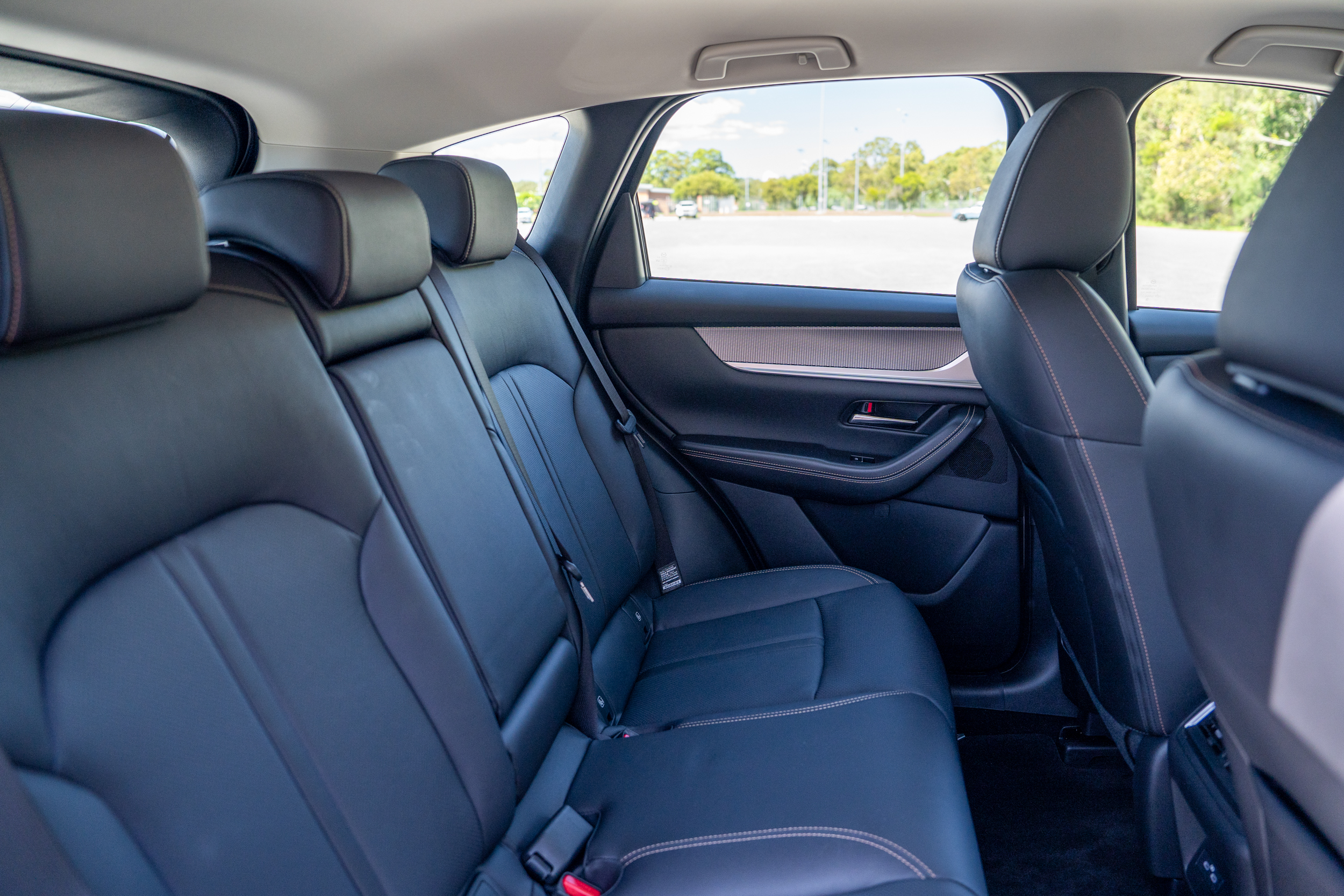
- Rear seat space is tighter than key rivals.
- Now competes across both mainstream and near-luxury SUV segments.
Our Verdict: Mazda CX-60 Rating
7.5/10
The CX-60 is no longer the awkward newcomer it once was. With pricing adjustments and suspension improvements, it now feels far more competitive and better resolved.
It’s a compelling choice for drivers who want something more engaging than a typical family SUV, but it still doesn’t fully match the comfort and polish of top-tier luxury rivals.
Pros and Cons
Pros
- Significant price repositioning improves value
- Smooth and characterful six-cylinder engines
- More stable and controlled at highway speeds
- Strong standard equipment across the range
Cons
- Ride still firm on rough or broken roads
- Rear seat space is tighter than competitors
- Fuel consumption higher than hybrid rivals
- Infotainment controller divides opinion
Pricing and Equipment
The 2026 CX-60 lineup now starts more affordably than before, opening with the new entry-level G25 Pure.
Key variants:
- G25 Pure (2.5L petrol, RWD) – from $44,240 + on-road costs
- G40e (3.3L turbo petrol inline-six mild hybrid) – from $50,240 + on-road costs
- Diesel (D50e) and plug-in hybrid (P50e) models extend the range into the $80K+ bracket
Across the range, there are 18 different variants, offering a wide spread of price points and drivetrains.
Standard Features (Pure grade)
- 18-inch alloy wheels
- 10.25-inch infotainment display
- 7-inch digital driver display
- Head-up display
- Wireless Apple CarPlay & Android Auto
- Satellite navigation
- Dual-zone climate control
- Eight-speaker audio system
Higher trims add:
- Leather upholstery and power-adjustable seats
- Larger infotainment screens
- Premium audio systems
- Adaptive LED headlights
- Panoramic sunroof
👉 Book a test drive: Experience the CX-60 range and see which variant suits you best.
Warranty and Servicing
The CX-60 is backed by:
- 5-year unlimited kilometre warranty
- 5 years roadside assistance
Servicing is required every 12 months or 15,000km, with capped-price servicing averaging $708.80 per visit over the first five services.
While not excessive, it is higher than many mainstream rivals—especially hybrid-focused SUVs like the Toyota RAV4.
Drive Home the Mazda CX-60 Today
Let us take care of the negotiations while you focus on choosing your perfect spec. We’ll secure the best available CX-60 offer, fast, simple, and hassle-free.
Safety
The CX-60 holds a 5-star ANCAP safety rating (2023 testing protocols).
Standard safety equipment includes:
- Autonomous emergency braking
- Adaptive cruise control
- Blind spot monitoring
- Lane keep assist
- Rear cross traffic alert
- 360-degree camera
Higher trims add:
- Driver monitoring systems
- Front cross traffic alert
- See-through camera functionality
Some systems, particularly lane assist and speed sign recognition, can feel overly sensitive on poorly marked roads.
Space, Comfort and Interior Quality
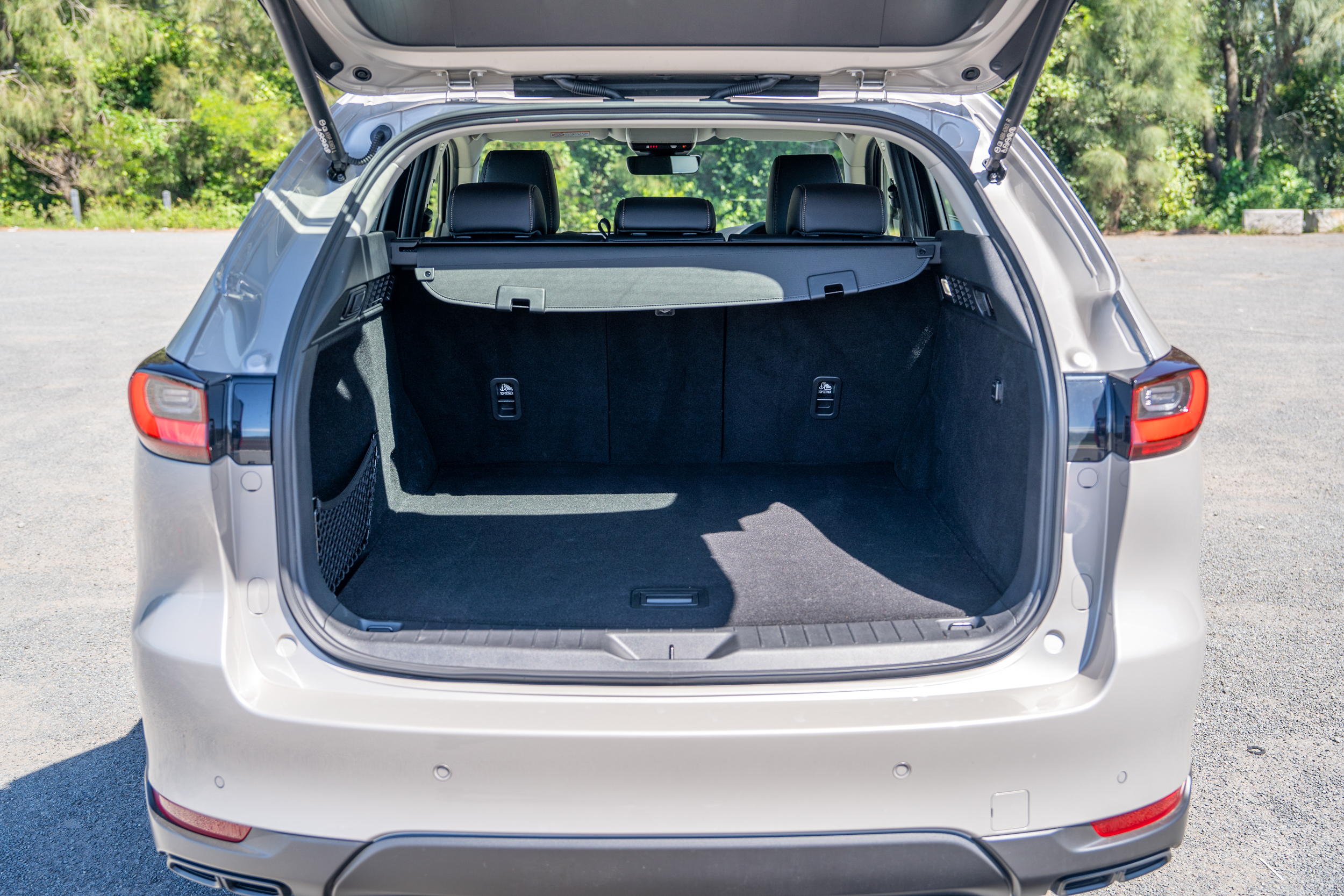
Boot space measures:
- 570L (with underfloor storage)
- 477L (standard measurement)
- 1,726L (rear seats folded)
While competitive on paper, interior packaging is affected by the rear-drive platform.
Key observations:
- Large centre console reduces cabin flexibility
- Rear seat space is tighter than rivals like the Toyota RAV4 and Kia Sportage
- Middle rear seat is best suited for short trips only
- Storage is adequate but not class-leading
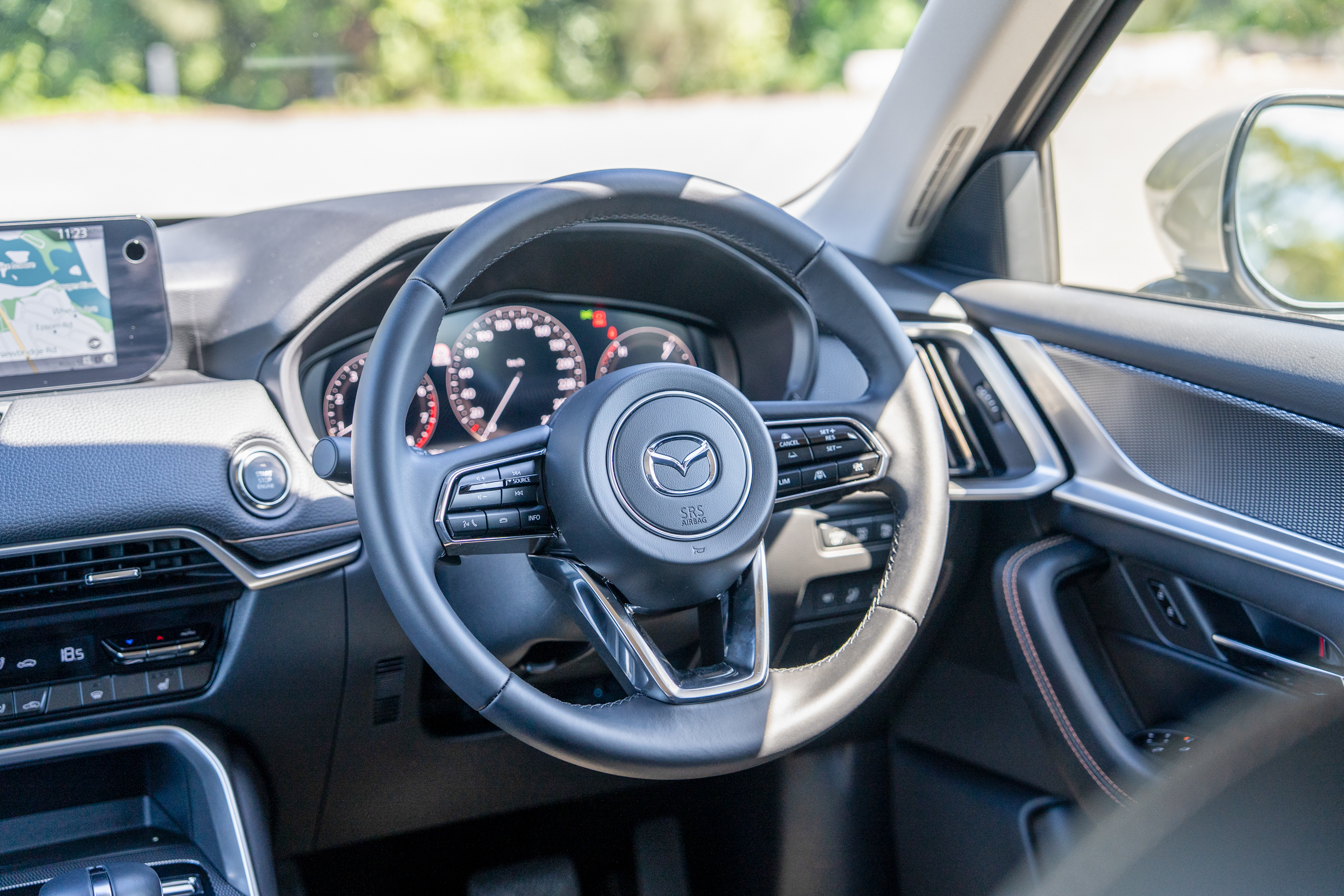
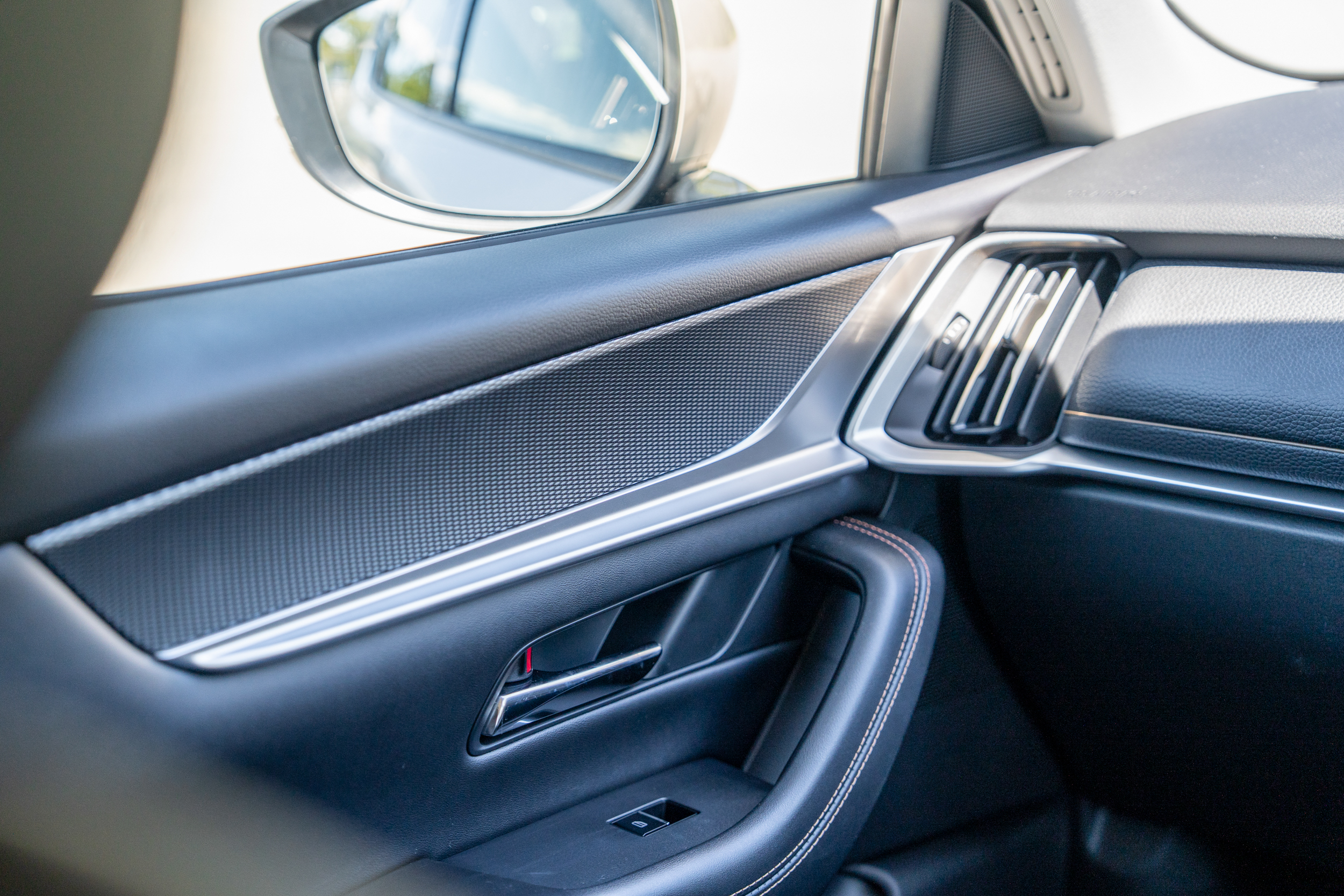
Inside, the CX-60 feels clean and premium, with physical climate controls retained, a welcome touch in a touchscreen-heavy market.
However, the infotainment system requires use of a rotary controller while driving, which some users may find distracting.
Powertrain and Driving Experience
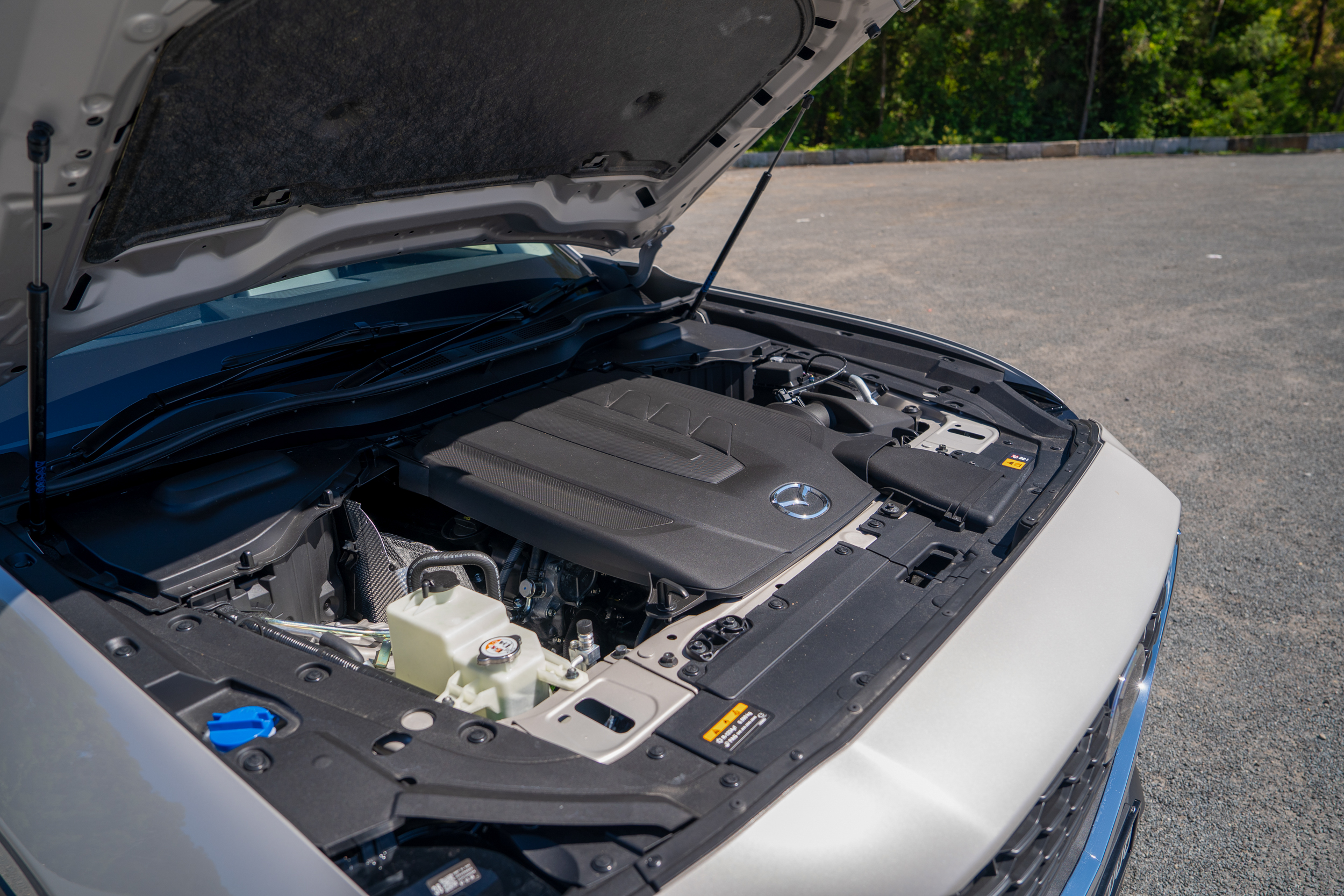
The biggest highlight of the CX-60 is its rear-wheel-drive architecture and inline six-cylinder engines.
Driving Improvements (2025 update)
Mazda revised:
- Suspension damping
- Rear spring rates
- Steering calibration
On the road:
- Noticeably improved stability at highway speeds
- Better body control during direction changes
- Still firm over sharp urban bumps
The 3.3L inline-six turbo mild hybrid remains the standout engine:
- Smooth, responsive, and refined
- Strong performance with a premium feel
- Adds character missing from most rivals
However, real-world fuel consumption is higher than claimed:
- Claimed: 7.4L/100km
- Tested: ~9.8L/100km
The base 2.5L four-cylinder is more affordable but feels underpowered in comparison.
👉 Watch full review: See how the CX-60 performs on real roads and highways.
Towing Capacity
- 2.5L petrol: up to 1,800kg
- Six-cylinder & PHEV: up to 2,500kg
This makes it suitable for light caravanning and towing duties, especially in higher-spec variants.
Main Rivals
- Kia Sportage – spacious, comfortable, and strong value
- Toyota RAV4 – class-leading hybrid efficiency and reliability
- Mitsubishi Outlander – practical and available as a plug-in hybrid
Final Verdict
The Mazda CX-60 is no longer the flawed newcomer it once was. Thanks to pricing adjustments, suspension improvements, and broader engine choices, it now feels like a serious contender in the mid-size SUV segment.
It still isn’t perfect ride, comfort and rear space remain weaknesses, but it successfully bridges the gap between mainstream SUVs and entry-level luxury models.