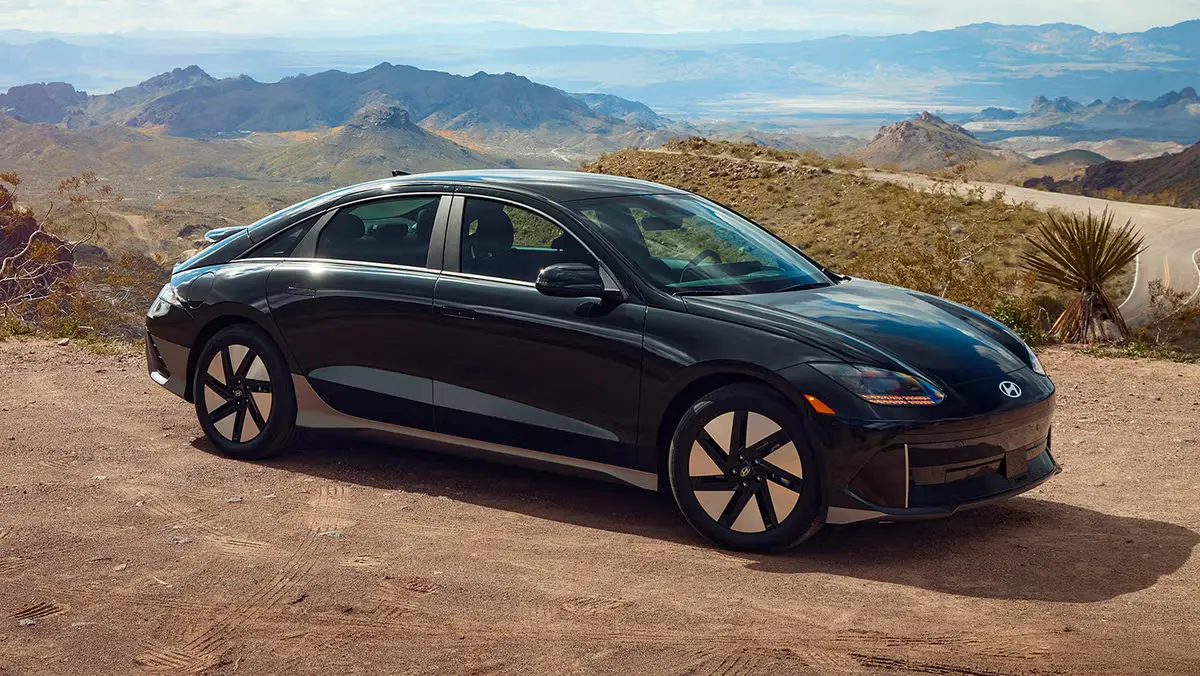
The 2025 Hyundai Ioniq 6 is a sleek, midsize electric fastback that arrives with confidence in the Aussie market. Its “electrified streamliner” design cuts through air with a drag‑minimised silhouette, offering style and substance. Aussies looking for something practical yet distinct in the EV landscape will find it compelling, especially with its slick tech, comfy cabin and whisper‑quiet highway cruising.
Pros and Cons
Pros
- Impressive driving range that makes long trips realistic
- Aerodynamic design that actually helps performance
- Quality interior with premium materials
- Packed with tech, even in base trims
Cons
- Rear headroom is limited for taller passengers
- Steering feels a bit detached on twisty roads
- Boot space is decent but not class-leading
How Much Does It Cost?
The Hyundai Ioniq 6 price in Australia starts at approximately $67,500 drive-away for the base Dynamiq variant with rear-wheel drive and a 53 kWh battery. The Long Range 77.4 kWh version with all-wheel drive climbs closer to $85,000, depending on the trim and options. Considering the features and range on offer, it holds decent value for a premium electric sedan.
Some states offer EV incentives that can shave a few thousand off the price, so it’s worth checking with your local dealer.
Features and Benefits
Let’s talk about the Hyundai Ioniq 6 specifications. The base model has a 53 kWh battery and around 429 km of range (WLTP), while the Long Range version stretches to around 614 km in ideal conditions. Charging is fast too, with 800-volt architecture allowing 10 to 80 percent charge in just 18 minutes on a 350 kW charger.
Inside, you get a dual 12.3-inch display setup, ambient lighting, eco-friendly upholstery, and plenty of legroom in the front. The cabin is whisper quiet, even on the highway, making long drives surprisingly relaxing.
Safety
The Hyundai Ioniq 6 comes loaded with Hyundai’s SmartSense safety suite. Features include lane keeping assist, adaptive cruise control, blind-spot monitoring, and forward collision avoidance with pedestrian and cyclist detection. It also features rear cross-traffic alert and a surround view monitor in higher trims.
The vehicle has earned top marks in global safety tests, and it is expected to hold a strong ANCAP safety rating in Australia too.
Running Costs
Electric vehicles are cheaper to run than petrol or diesel cars, and the Ioniq 6 is no different. Charging at home on an average tariff might cost between $10 and $15 per 100 km. Public fast charging is quicker but slightly more expensive per kWh.
Scheduled servicing intervals are generous, and with fewer moving parts than a combustion engine, ongoing maintenance is minimal. Hyundai also offers a five-year unlimited kilometre warranty, along with an eight-year warranty on the battery.
Comparison to Its Competitors
Compared to the Tesla Model 3, the Polestar 2, and the BYD Seal, the Ioniq 6 lands in a unique spot. It has more refinement than the Tesla, a more distinctive design than the Polestar, and a higher-quality interior than the BYD. While the Model 3 still holds the edge in performance, the Ioniq 6 wins on comfort, styling, and real-world usability.
Unveiling the Future: 2025 Hyundai Ioniq 6 Redefines Electric Driving
Conclusion
The Hyundai Ioniq 6 2025 release date cannot come soon enough. Hyundai has massaged the styling, tightened the tech and kept the fun-to-drive character that already set the sedan apart. It is not a bargain, yet the blend of range, charging speed and interior ambience feels class-up. Provided you fit under that fastback roof, it is a deeply convincing alternative to the usual suspects.
Rating: 8.6/10
The Hyundai Ioniq 6 earns top marks for efficiency, safety kit and genuine design bravery. Pricing and rear-seat space hold it back, but the long warranty, rapid charging and smooth road manners make it a confident pick for anyone ready to swap petrol for electrons without surrendering sedan style.