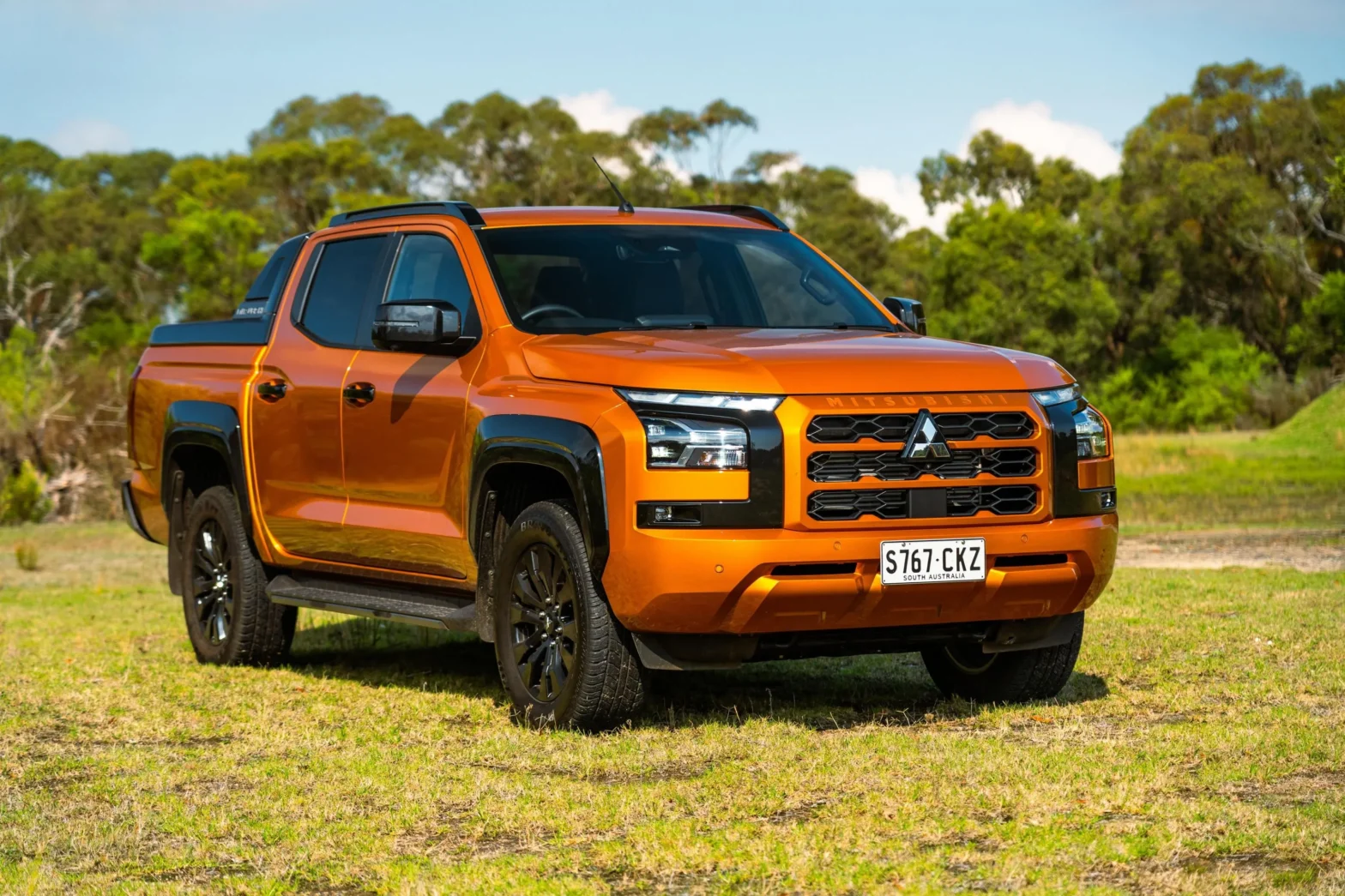
The 2025 MITSUBISHI Triton arrives in Australia with fresh sheet‑metal, a wider track, and a 2.4‑litre bi‑turbo diesel that puts out 150 kW and 470 Nm. Mitsubishi’s designers have finally parked the chrome moustache and given this ute a square‑jawed look that would not look lost outside a mine site or a café. Under the skin sits the new ladder‑frame chassis shared with the Thai‑market L200, but tuned for local conditions. Super‑Select 4WD‑II now features seven terrain modes, and braked towing climbs to 3,500 kg, so the Triton can finally say “same here” when the Ranger and HiLux start bragging about trailers.
Pros and Cons
Pros
- Big torque from low revs keeps you off boost lag purgatory.
- Super‑Select 4WD‑II delivers full‑time AWD for wet bitumen as well as low‑range for the rough stuff.
- Ten‑year warranty and capped‑price servicing take the sting out of ute ownership.
Cons
- Halogen headlights on lower trims feel miserly in 2025.
- The driver‑monitoring camera is about as forgiving as a camp‑site magpie.
- GLX cab‑chassis still uses a vinyl floor that turns the cabin into a sauna in summer.
How Much Does It Cost?
Mitsubishi has scattered the 2025 Mitsubishi Triton price band like shiny bait: from $34,490 for a 4×2 GLX single‑cab manual up to $63,840 for the GSR dual‑cab pickup. Dual‑cab 4×4 volumes start at $50,940 (GLX auto). The new Club Cab and single‑cab chassis variants land progressively through 2025, giving fleet buyers and tray‑fitters far more choice than last year.
Features and Benefits
Calling this a facelift would be criminal: the Mitsubishi Triton redesign brings a stiffer frame, hydraulic cab mounts, and a cabin that finally fits adults in the rear. Every grade runs the new 9‑inch infotainment unit with wireless CarPlay, and GLS upward scores wireless phone charging plus LED headlights. On‑road the ute feels lighter in the nose thanks to electric power steering, while off‑road the 470 Nm engine, rear diff lock, and terrain control system make short work of boggy ruts, handy if your weekend involves a tinny, two eskies, and a beach permit. If you are hunting SEO phrases, note these 2025 Mitsubishi Triton features also include a 360‑degree camera on GLS and GSR, plus brake‑based yaw control to tidy up slides on gravel.
Safety
ANCAP handed the new ute a five‑star rating under its tough 2023‑2025 protocols, the first dual‑cab to pass that test cycle. Autonomous emergency braking works day and night, lane‑keep assist reacts gently rather than yanking, and the Triton debuts a camera‑based Driver Monitoring System that judges your eyelid Olympics whenever the road gets boring.
Running Costs
Service intervals sit at 15,000 km or 12 months, and the capped‑price schedule averages $799 a year for the first five visits. The official combined cycle hovers around 7.7 L/100 km for a 4×4 auto, and real‑world runs have shown mid‑8s with a light load. Mitsubishi’s 10‑year / 200,000 km Diamond Advantage warranty remains the longest in the class, long enough for a child to move from first day of school to P‑plates.
Comparison To Its Competitors
Against a Ford Ranger XLT the Triton gives away 400 kg of GCM headroom but claws back value with a $6,000 lower sticker. Toyota’s HiLux Rogue still carries a six‑month warranty and a harsher ride on corrugations. Isuzu’s D‑Max equals the Triton on warranty length only if you buy the aftermarket extension, while the upcoming Kia Tasman undercuts on price but cannot match the Triton’s full‑time AWD. Where the 2025 Mitsubishi Triton off‑road capabilities really shine is brake‑based active yaw control and selectable AWD on‑road, features none of its key rivals combine in one package. Approach and departure angles (31° and 23°) are shy of Ranger Wildtrak numbers yet still clear most washouts without crunching the tow‑bar.
2025 Mitsubishi Triton GLX‑R 4×4 Review: Tough Workhorse, Smooth On‑Road Cruiser
Conclusion
Mitsubishi has not tried to reinvent the ute. Instead, it has listened to tradies moaning about payloads, grey nomads dreaming of towing three‑tonne vans, and city buyers wanting ranger‑rival tech. The result is a Triton that feels grown‑up without losing the brand’s reputation for shrugging off abuse. Add ten‑year peace of mind, and the value proposition lands like a well‑placed tent peg.
Rating: 8.2/10
It nails the brief on price, warranty, and ride comfort, but loses a point for stingy base lighting and another for that over‑eager driver‑monitoring system. Still, it is the most convincing Triton yet, and finally a ute I would throw my own camping gear into without hesitation.