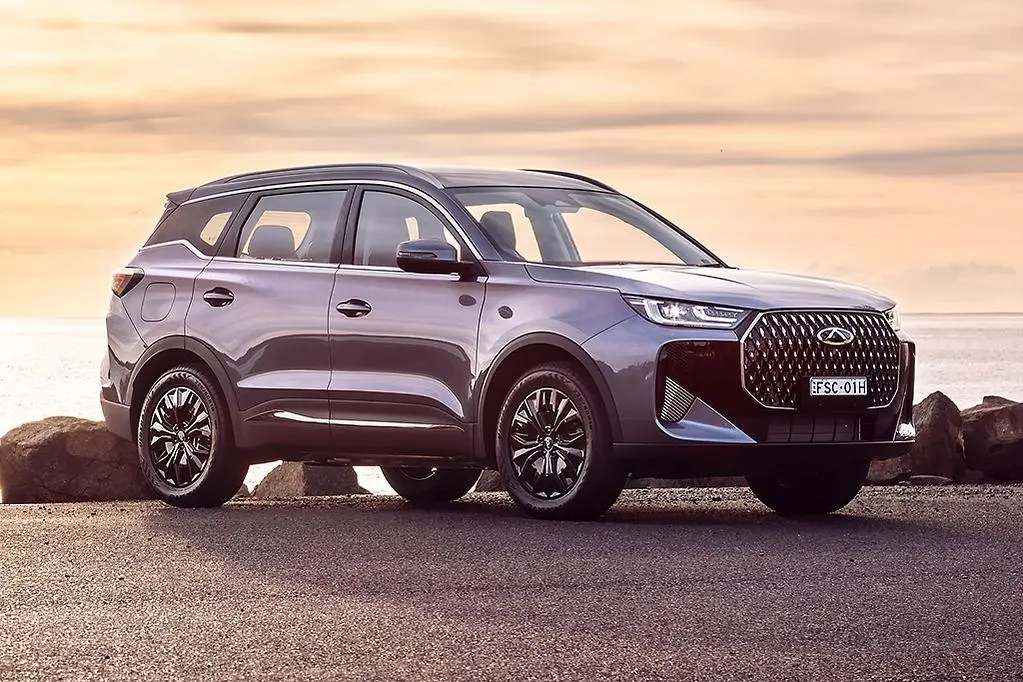
Chery’s first plug‑in hybrid to reach Australian soil, the 2025 CHERY Tiggo 7 Super Hybrid, does not tip‑toe into the mid‑size SUV segment, it cannonballs in with a $39,990 drive‑away sticker and a promise of 93 km of electric‑only range. Under the bonnet sits a 1.5‑litre turbo petrol engine teamed with a punchy electric motor for a combined 255 kW and 525 Nm, yet the official combined thirst is a laughably small 1.4 L/100 km. On launch, that cocktail of power, range and price instantly made it the nation’s cheapest PHEV.
Pros and Cons
Pros
- Brisk electric shove off the line
- Dual 12.3‑inch screens that look pricier than your laptop
- Cosseting ride over Sydney’s war‑torn bitumen
Cons
- Steering feels like it was tuned for a PlayStation rather than the Pacific Highway
- No spare wheel thanks to the battery, hope you like goo and compressors
- Styling is respectable but hardly driveway art
How Much Does It Cost?
The 2025 CHERY Tiggo 7 Super Hybrid price story is refreshingly short. Urban grade: $39,990 drive‑away. Ultimate grade: $43,990 drive‑away. Both include seven‑year/unlimited‑kilometre warranty and roadside assist, plus seven‑year capped‑price servicing.
Features and Benefits
Even the entry Urban variant arrives wearing 18‑inch alloys, synthetic leather, twin 12.3‑inch screens with wireless Android Auto and Apple CarPlay, LED lighting all round, a powered driver seat and a full suite of CHERY Tiggo 7 Super Hybrid technology such as adaptive cruise and driver‑monitoring. Splash out for the Ultimate and you add a panoramic sunroof, ambient lighting, heated and ventilated front pews, wireless phone charging and a Sony eight‑speaker system. In person the cabin materials feel one tax bracket above the asking price, and the physical gear lever is a welcome nod to people who still like levers.
Safety
The petrol Tiggo 7 already holds a five‑star ANCAP score; Chery expects the hybrid to match it when tested. Standard kit includes autonomous emergency braking, lane‑keep tech, blind‑spot monitoring, rear cross‑traffic braking, traffic‑jam assist and a driver‑monitor camera. Ultimate buyers also snag 360‑degree cameras and powered child‑safety locks. That is a tidal wave of acronyms for under forty grand.
Running Costs
Official energy use is 1.4 L/100 km with the battery full, and real‑world testers are seeing mid‑fours once the charge is gone, still penny‑pinching for a 1.7‑tonne SUV. The 18.3 kWh LFP battery can DC‑fast‑charge from 30 to 80 percent in about 20 minutes, handy when the kids demand a servo ice‑cream. Servicing over the first seven years totals $3,174, or around $450 a year, cheaper than what many rivals ask for five‑year cover.
Comparison To Its Competitors
The Tiggo 7’s closest challenger on price is the BYD Sealion 6 PHEV at $42,990 before on‑roads, yet the Chery undercuts it while matching its headline 90‑odd‑kilometre electric range. Step up to a Mitsubishi Outlander PHEV and you are staring at $53,190 plus dealer costs for the base ES, ballooning past $75,000 for the fancy GSR. Toyota’s RAV4 Hybrid and Kia Sportage Hybrid sit in the same showroom space but they are conventional hybrids, no plug, smaller batteries, shorter EV stints and, in current supply, longer waitlists. For buyers chasing affordable, long‑range plug‑in ability, the 2025 CHERY Tiggo 7 Super Hybrid specifications put it in a class of one.
2025 CHERY Tiggo 7 Super Hybrid Review: Price, Size, Range and Safety Explained
Conclusion
Chery’s pitch is simple: give Australia an SUV that looks mainstream, drives quietly, sips fuel like a barista on decaf and costs less than a fancy dual‑cab ute. After a week behind the wheel I reckon the brand has landed the punch. It is not a driver’s car in the traditional sense, and the steering could use a double espresso, but for school runs, commutes and the odd Canberra dash it makes more sense than many headline‑grabbers wearing Japanese or Korean badges.
Rating: 8.4/10
The Tiggo 7 Super Hybrid nails value, efficiency and equipment, loses a few marks for dynamic sparkle and boot packaging, but still feels like the smartest spend in plug‑in territory this side of fifty grand.