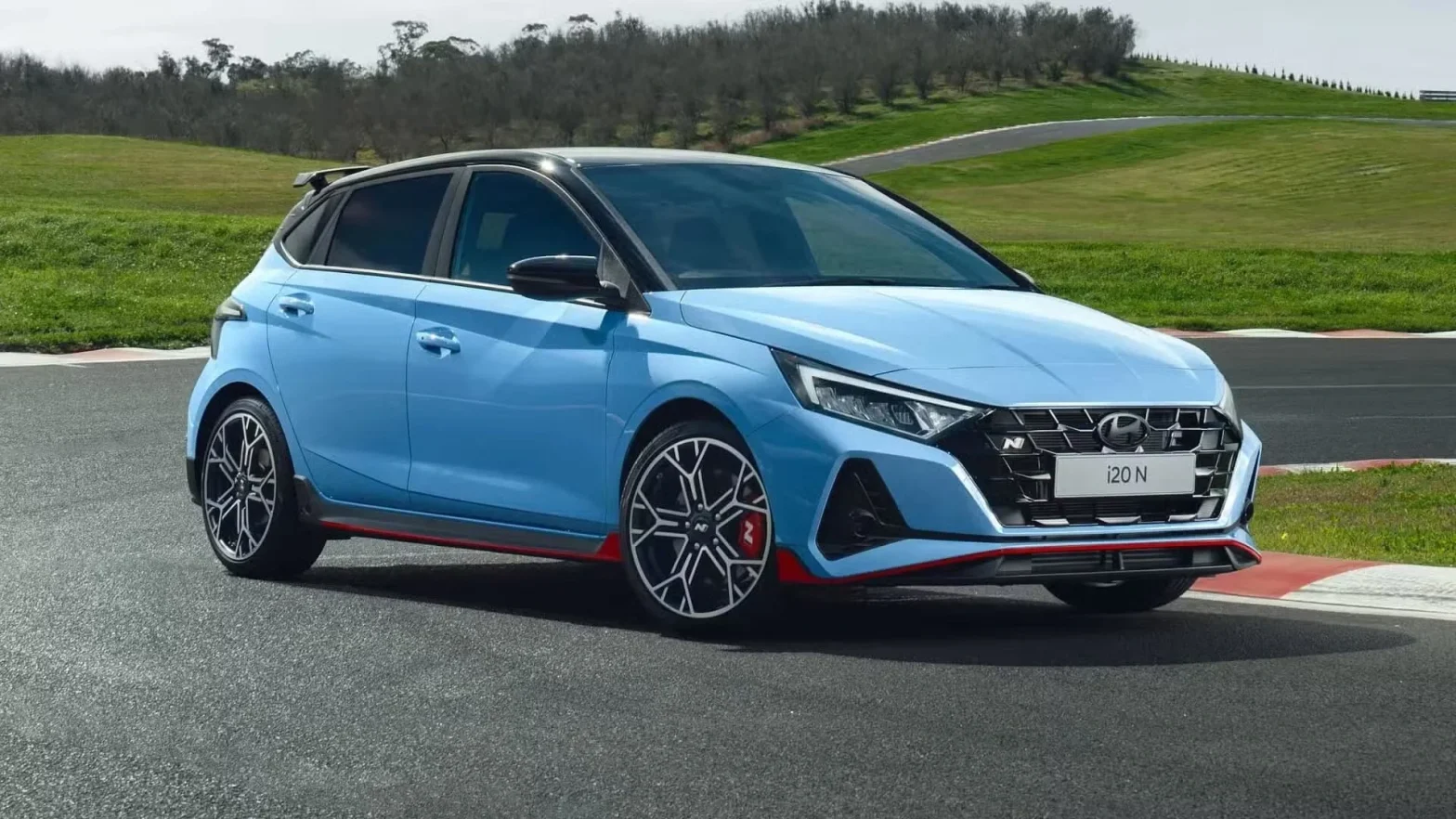
The 2025 Hyundai i20 is set to make waves in the compact car segment with its impressive blend of style, technology, and efficiency. This latest iteration boasts a sleek design that enhances its aerodynamic profile while providing ample interior space for passengers and cargo.
In terms of performance, the 2025 Hyundai i20 offers a range of engine options tailored to meet diverse driving needs. The specifications include efficient petrol and diesel engines that promise excellent fuel consumption rates, making it an economical choice for daily commutes and long drives alike.
Pros and Cons
Pros
- Feisty 150 kW engine loves to rev
- Bulletproof five-year warranty and cheap capped-price servicing
- 6.9 L/100 km official Hyundai i20 fuel consumption figure is respectable for the pace on offer
- Manual gearbox keeps the driver involved (and thieves confused)
Cons
- No auto option if you are allergic to three pedals
- Firm ride on those new 18-inch wheels over pock-marked city streets
- Active safety suite lacks adaptive cruise and 360-degree camera
- Rear seat is cosy for adults
How Much Does It Cost?
The Hyundai i20 price starts at $35,500 before on-road costs for the single N variant, about three grand up on launch but still Australia’s least-expensive “proper” hot hatch. Step-up paint adds $595, and a two-tone roof is a cheeky extra grand. Even fully loaded, you are under forty on the road, which undercuts the Volkswagen Polo GTI by thousands.
Features and Benefits
Hyundai resisted the urge to throw big screens at the i20. Instead you get a crisp 10.25-inch infotainment unit with wired phone mirroring, sports buckets trimmed in hardy cloth, alloy pedals, launch control, and an active exhaust that delivers cheeky pops between shifts. Digital gauges include a track timer, handy for bragging rights at Wakefield Park, and the N modes let you tailor throttle, steering and rev-match aggressiveness. The Hyundai i20 specs sheet also lists LED lights all round and keyless entry, so daily-driver chores are covered.
Safety
ANCAP has not yet put the facelifted car into a wall, but Hyundai loads every i20 with autonomous emergency braking, lane-keep assist, blind-spot monitoring, rear cross-traffic alert and six airbags. The absence of adaptive cruise hurts on Melbourne-Sydney runs, yet around town the suite works quietly in the background.
Running Costs
Service intervals are 12 months/10,000 km, each visit averaging about $380, peanuts next to German rivals. The 6.9 L/100 km combined claim proved realistic in our testing, provided you resist the temptation to chase that raspy redline. A conventional 12-volt AGM battery (around 55 Ah, 650 CCA) keeps things simple and cheap when replacement time rolls around, and aftermarket options are plentiful.
Comparison To Its Competitors
Ford’s Fiesta ST is gone, leaving the Volkswagen Polo GTI as the closest foe, quicker in a straight line but saddled with a dual-clutch gearbox only and a sticker north of $40,000. The Suzuki Swift Sport is cheaper but 44 kW down and softer everywhere. For similar money you could buy a rear-drive Mazda MX-5 or Subaru BRZ, yet neither will haul furniture or squeeze into an inner-city car park like the Hyundai i20. In short, the Hyundai occupies a niche that is now almost without peers.
The 2025 Hyundai i20 N Redefines Hot Hatch Excitement!
Conclusion
The 2025 Hyundai i20 feels like a last hurrah for lightweight, manual hot hatches. It blends genuine pace, cheeky exhaust theatrics, solid equipment and the sort of warranty Australians expect. Yes, a Toyota Corolla Hybrid will sip half the fuel and a Polo is more polished, but neither will make your Monday commute feel like a victory lap. If you value driver engagement over digital frills, this is the small hatch to bag before EVs take the lot.
Rating: 9/10
The Hyundai i20 earns top marks for performance, value and grin factor. It drops a point for the uncompromising ride and the absence of an auto or adaptive cruise, but in every other respect it nails the hot-hatch brief and keeps ownership costs realistic. In a shrinking segment, that combination is gold.