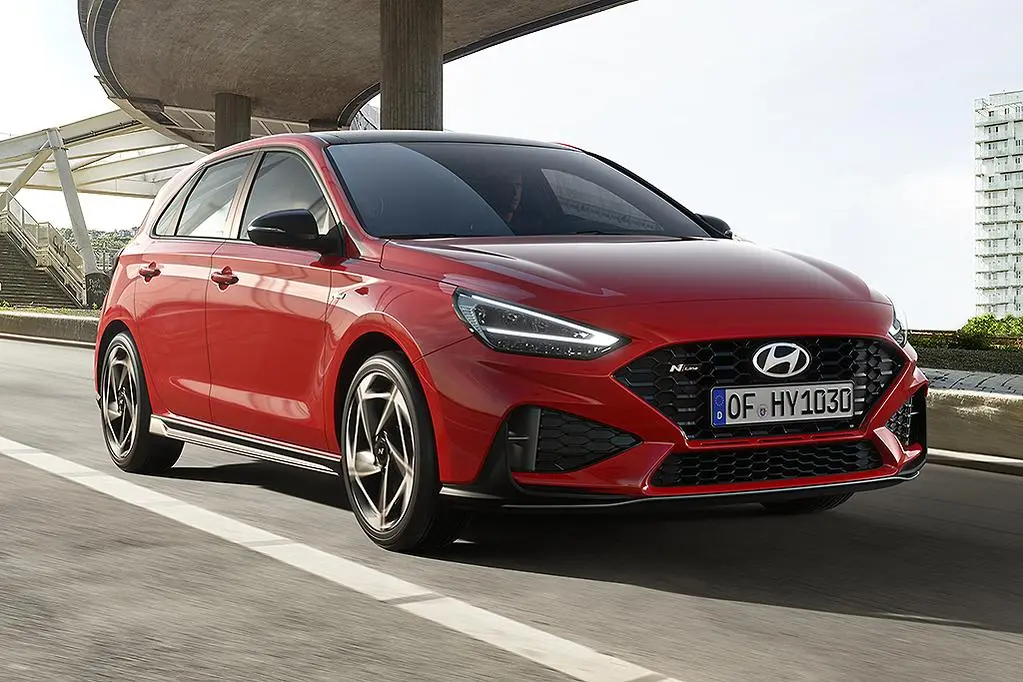
The 2025 HYUNDAI i30 rolls into Australian showrooms like a veteran on a comeback tour. A second facelift brings crisper bumpers, slimmer LED lights and a tidier dashboard, while an all-new mild-hybrid power-train helps the small-car stalwart fend off the Corolla, Mazda3 and a wave of compact SUVs. Underneath, Hyundai has broadened the engine menu and fine-tuned the suspension, so the i30 still feels cheeky on a winding back road yet easy to thread through city traffic. First customer cars hit dealers in March 2024 and the 2025 build continues unchanged into the current model year.
Pros and Cons
Pros
- The 2025 Hyundai i30 price list still starts at $24,000 and tops out at $55,500, covering learners to track-day tragics.
- New 1.5-litre turbo mild-hybrid dishes up strong mid-range shove without wallet-worrying thirst.
- Cabin finally gets a 10.25-inch digital cluster and wireless phone mirroring.
Cons
- Facelifted sedan scores only three stars in the latest ANCAP test.
- Hot-hatch N gulping 8.5 L/100 km reminds you physics still rules.
How Much Does It Cost?
The menu begins with the 110 kW 2.0-litre Base hatch at $24,000 before on-roads, rises to the 117 kW N Line Premium hatch at just over $41,000, and peaks with the 206 kW i30 N Premium with Sunroof at $55,500. Hybrid sedan buyers need about $33,000. Hyundai backs every variant with five-year/unlimited-kilometre warranty and capped-price servicing.
Features and Benefits
Even the cheapest car brings LED headlights, alloy wheels, wireless Apple CarPlay/Android Auto and the full SmartSense safety suite. N Line adds the new 1.5-litre turbo, seven-speed dual-clutch, sports seats and Michelin Pilot Sport 4 rubber. Inside, a floating 10.25-inch centre screen, dash-wide vents and soft-touch plastics lift ambience to near–Ioniq territory. Flagship i30 N layers on adaptive dampers, launch control and an N Grin Shift button that grants ten seconds of extra boost for over-taking thrills.
Safety
Here is the curve-ball: ANCAP’s 2024 protocol handed the facelifted sedan only three stars, citing middling adult-occupant and vulnerable-road-user scores. Older hatch variants still wear a five-star badge from 2017 but have not been retested. All 2025 cars nevertheless fit autonomous emergency braking (pedestrian/cyclist), lane-keeping assist, blind-spot warning and rear cross-traffic alert as standard.
Running Costs
Fuel use ranges from a thrifty 3.9 L/100 km for the hybrid sedan through 5.6 L/100 km in the N Line Premium hatch to 8.5 L/100 km for the eight-speed-auto i30 N. Servicing is locked at roughly $377 a year for the first five visits, and Hyundai’s warranty even covers limited track use in N models, something few rivals match.
Comparison To Its Competitors
Toyota’s Corolla Hybrid still wins the fuel-sipper trophy, but the Hyundai fights back with bolder infotainment and sharper steering. Mazda3 feels classier inside yet starts pricier and offers fewer engines. Kia’s Cerato undercuts on drive-away deals, although the i30 is quieter at highway speed. New-arrival MG4 EV serves up electric torque for similar money, but charging and resale remain question marks. Hot-hatch shoppers weighing the Volkswagen Golf GTI will find the i30 N cheaper, rowdier and covered by a warranty that includes track days.
2025 Hyundai i30 Review: Price, Size, Efficiency & Safety Unpacked
Conclusion
The 2025 HYUNDAI i30 shows that the humble hatchback still matters in an SUV-obsessed market. A wide price band, lively power-trains and a cabin that finally feels current make it a genuine all-rounder. The sedan’s safety-rating slip and the full-fat N’s appetite for 98-RON keep it from perfection, yet for many buyers the blend of value, polish and driving fun will be spot-on.
Rating: 8.1/10
After a week of peak-hour commuting, baby-seat wrangling and one spirited run down the Old Pacific Highway, the updated range scores 8.1/10. Engaging engines, improved tech and sensible running costs lift the score, while the sedan’s safety stumble and thirsty flagship variants stop the i30 nudging the nines.