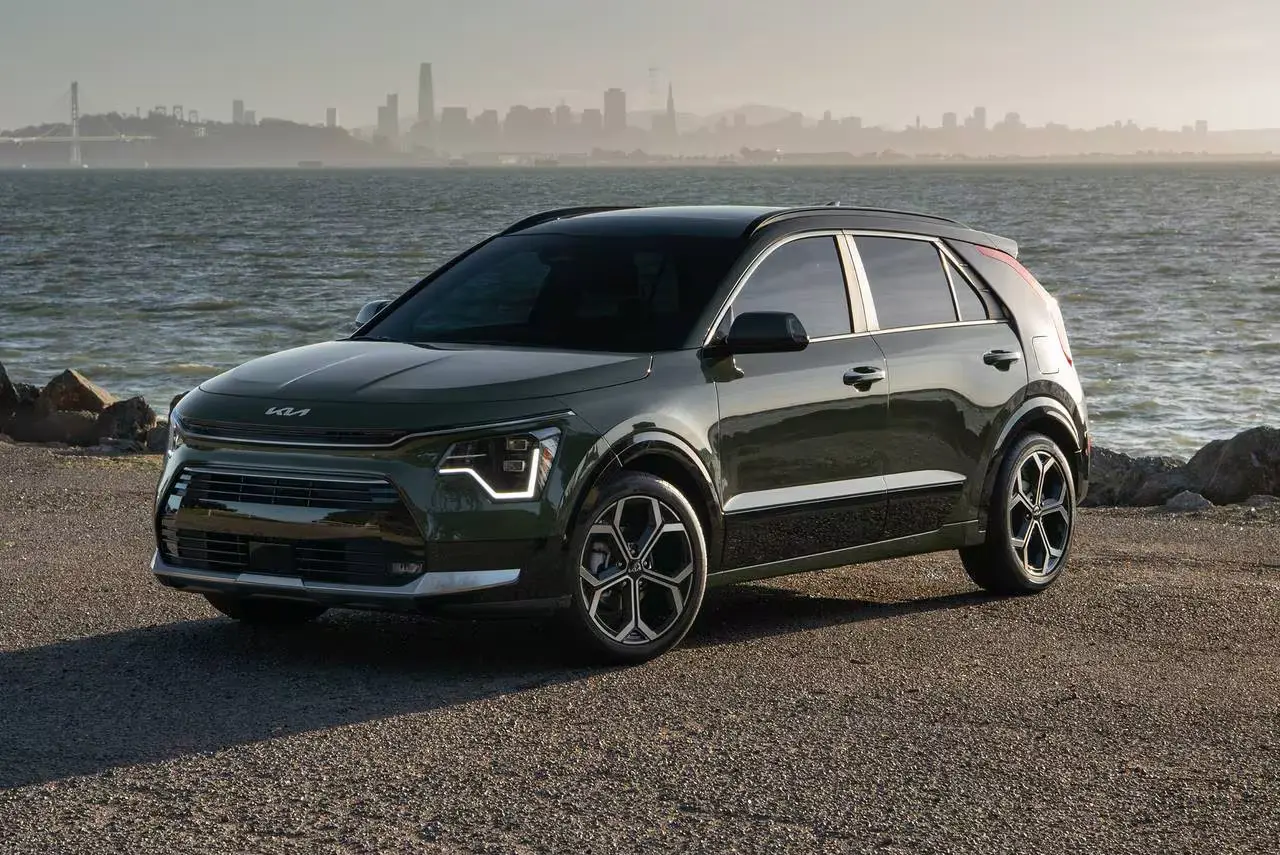
The 2025 KIA Niro is Australia’s sensible small SUV with a green streak and a tidy footprint. It sticks with the established recipe: a 1.6-litre petrol-electric hybrid for everyday use, tidy handling, and an interior that feels more grown-up than the badge price suggests. The fully electric Niro has stepped aside locally this year, leaving the hybrid to carry the torch, which actually suits how most Aussies drive and refuel.
Pros and Cons
Pros
• Excellent real-world fuel use for a non-plug-in hybrid.
• Neat, modern cabin with proper smartphone mirroring and Kia Connect.
• Seven-year warranty adds peace of mind.
Cons
• Pricing nudges into larger-SUV territory if you want the fancy trim.
• Electric version discontinued in Australia, so no local BEV option new from factory.
• Road noise on coarse chip is noticeable on the standard tyres (common in class).
How Much Does It Cost?
As at August 2025, the 2025 KIA Niro range lists from about $45,000 before on-roads for the HEV S, rising to around $50,650 for the HEV GT-Line. EV pricing is still shown on some databases ($66,590-$72,360), but the EV variant has ended its Aussie run and may only appear as remaining stock. Always check dealer availability.
Features and Benefits
If you are combing Google for “2025 KIA Niro specs” and “2025 KIA Niro features,” the headline items are straightforward. The 2025 KIA Niro hybrid pairs a 1.6-litre petrol engine with an e-motor and a six-speed dual-clutch auto driving the front wheels. Claimed consumption is 4.0 L/100 km combined, and the car runs on regular 91 RON. Inside, you get a 10.25-inch infotainment screen with wireless Apple CarPlay/Android Auto in higher trims, Kia Connect services, and a clean dash design that dodges clutter. The 2025 KIA Niro interior is practical with good rear legroom and thoughtful storage, while the 2025 KIA Niro exterior design keeps the funky aero blade look without shouting about it.
Safety
The second-gen Niro carries a five-star ANCAP rating for Australia and New Zealand, applying to all variants. Standard safety tech includes AEB with junction assist, lane-keep assist, blind-spot monitoring and a centre airbag. If you are checking “2025 KIA Niro safety ratings,” that is the key line: five stars across the board.
Running Costs
This is where the Niro quietly wins. Official combined consumption is 4.0 L/100 km, which is thrifty for a roomy small SUV. Kia backs the car with a 7-year/unlimited-kilometre warranty, plus 7-year capped-price servicing. For the 2025 HEV, Kia’s published capped-price schedule shows indicative service pricing at 12-month/15,000 km intervals through seven years, so budgeting is simple. In short: the 2025 KIA Niro fuel efficiency is strong, and the ownership maths is easy to live with.
Comparison To Its Competitors
Against a Toyota Corolla Cross Hybrid, the Niro feels a touch more polished inside and delivers similar economy, but Toyota often wins on purchase price and resale. A Hyundai Kona Hybrid is newer and nimbler, though back-seat space is tighter. Honda HR-V e:HEV is slick but pricey. If you were eyeing a 2025 KIA Niro electric, Kia now pushes shoppers toward the EV3 and EV5 for battery-only power, which explains why the Niro EV bowed out locally. For most city-and-suburb drivers, the Niro HEV hits the sweet spot of quiet running, low thirst and easy ownership.
Conclusion
As a 2025 KIA Niro review, the verdict is simple. If you want a compact SUV that behaves like a grown-up hatch and drinks like a scooter, the 2025 KIA Niro makes sense. It is not a bargain in upper trims, and the full EV has left the building, but the hybrid’s blend of low running costs, tidy performance, and fuss-free technology is hard to argue with. For buyers who value quiet competence over Instagram fireworks, this is a very easy car to recommend.
Rating: 7.7/10
The Niro earns points for efficiency, warranty cover and user-friendly tech, and it loses some for pricing in higher trims and the absence of a current 2025 KIA Niro electric option in Australia.