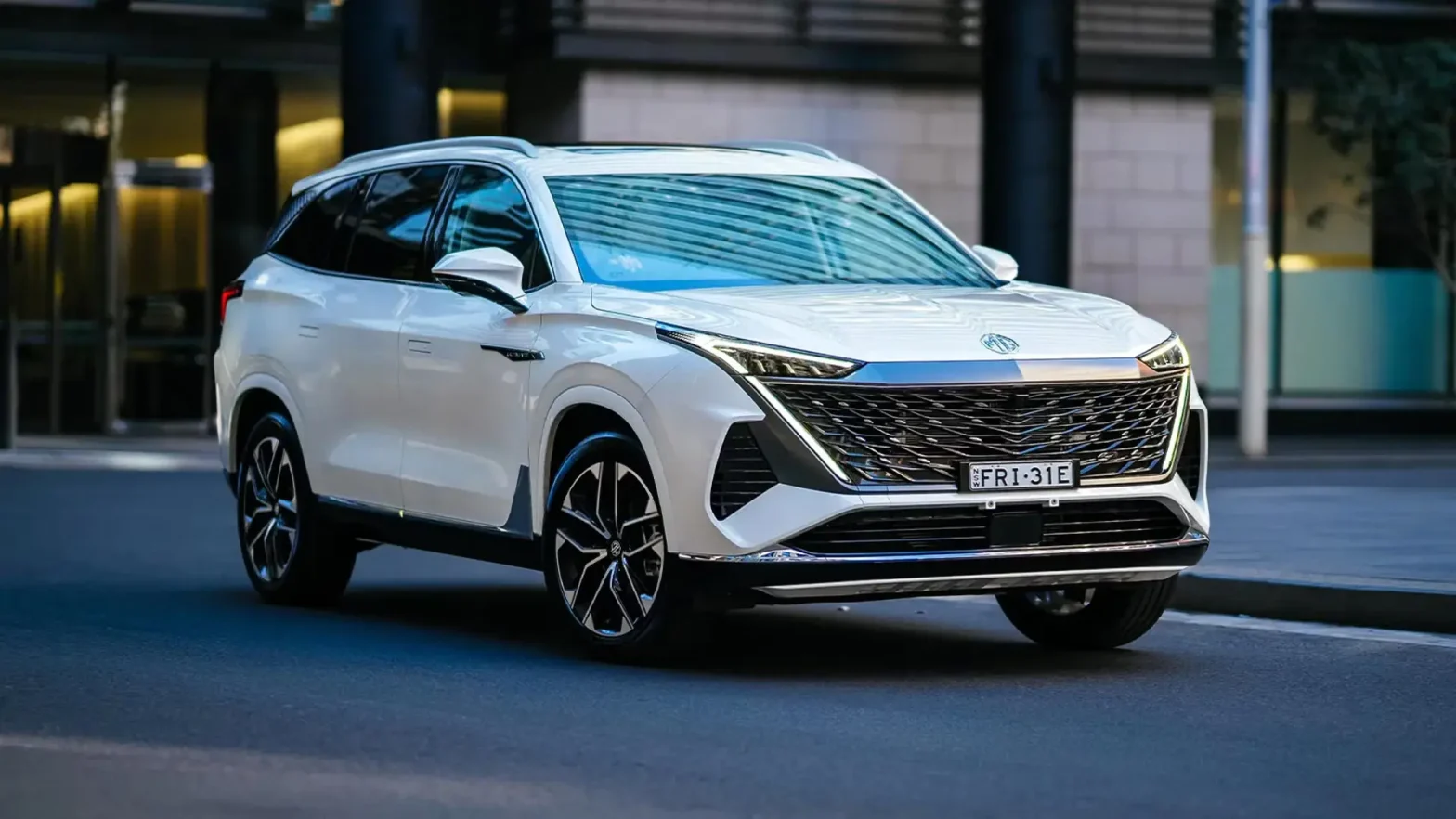
The 2025 MG QS arrives in Australia as MG’s first seven‑seat SUV, taking on favourites like the Toyota Kluger and Hyundai Santa Fe. It combines a robust 2.0-litre turbo petrol engine with a choice of front‑wheel or all‑wheel drive. Inside, dual 12.3‑inch screens bring a touch of tech-luxury at a keen price point, it debuted here on 14 May 2025, priced under $50,000 in opening trim.
Beyond the keen sticker, MG sweetens the deal with an industry-leading 10-year/250,000 km warranty, a full MG Pilot active-safety suite and genuinely adult-friendly seating in all three rows. The sliding second row can prioritise either leg-room or luggage, while standard kit such as tri-zone climate control, a panoramic glass roof and wireless Apple CarPlay/Android Auto helps the QS feel more “premium family shuttle” than “budget banger”. Together, the space, safety tech and after-sales coverage turn this newcomer from a price play into a credible alternative to the segment’s established stars.
Pros and Cons
Pros
- Genuine adult-friendly third row
- Long 10-year/250,000 km warranty
- Generous safety and infotainment spec at base price
Cons
- Thirstier than hybrid rivals (claimed 8.4–8.8 L/100 km)
- No electrified variant yet
- Badge cachet still trails Toyota and Hyundai in resale perception
How Much Does It Cost?
Introductory drive-away pricing starts at $46,990 for the front-drive Excite and $50,990 for the all-wheel-drive Essence. Both sit comfortably below every mainstream seven-seat competitor, giving MG the “budget-big-SUV” crown for 2025.
Features and Benefits
Every QS ships with twin 12.3-inch displays (digital cluster + infotainment), wireless Apple CarPlay/Android Auto, tri-zone climate, panoramic glass roof, powered tailgate and a clever sliding second row that frees leg-room or cargo space on demand. Essence adds adaptive suspension, ventilated leather, Bose-branded audio and terrain-specific drive modes.
Safety
MG throws its full i-Smart active-safety suite at both grades: autonomous emergency braking, adaptive cruise with lane centring, blind-spot monitoring, rear cross-traffic braking and a driver-monitor camera. Seven airbags include a centre airbag, matching the Kluger and beating some Chinese rivals on passive protection.
Running Costs
With no hybrid or electric option, fuel economy is the QS’s weak spot. The indicated 8.4–8.8 L/100 km lags behind Kluger Hybrid (5.6 L) or Sorento Diesel (6.1 L). Offset comes via the industry-leading warranty and capped-price servicing that averages roughly $380 per visit across five years, cheaper than most segment peers.
Comparison To Its Competitors
- Toyota Kluger Hybrid: smoother, thriftier, dearer (from $54,000 before on-road costs).
- Hyundai Santa Fe (new model due Q4 ’25): more premium cabin, shorter warranty, similar petrol thirst.
- Kia Sorento Diesel: punchy torque, but higher servicing costs and, like Hyundai only seven years’ coverage.
Against that trio, the QS’s headline advantages are sticker price, warranty length and a features list that reads like a top-spec at base money. Where it trails is drivetrain sophistication; shoppers focused on economy will notice the absence of hybrid power.
2025 MG QS Review: Features and First-Drive Review
Conclusion
MG’s QS does not reinvent the large-SUV formula; instead, it gamifies it. By blending a roomy, well-finished cabin with tech and safety ordinarily reserved for higher trims, then slicing several grand from the driveway price, it forces established brands to justify their premiums. The lack of a hybrid hurts its green credentials, yet for families who value purchase price and generosity of equipment over fuel metrics, the QS is a persuasive newcomer.
Rating: 8/10
The QS scores highly for interior space, warranty and value décor, dropping marks for drivetrain efficiency and brand cachet. In daily use it feels honest, well-equipped and surprisingly refined; improve fuel economy or add an electrified variant and MG could seriously rattle the segment’s hierarchy.