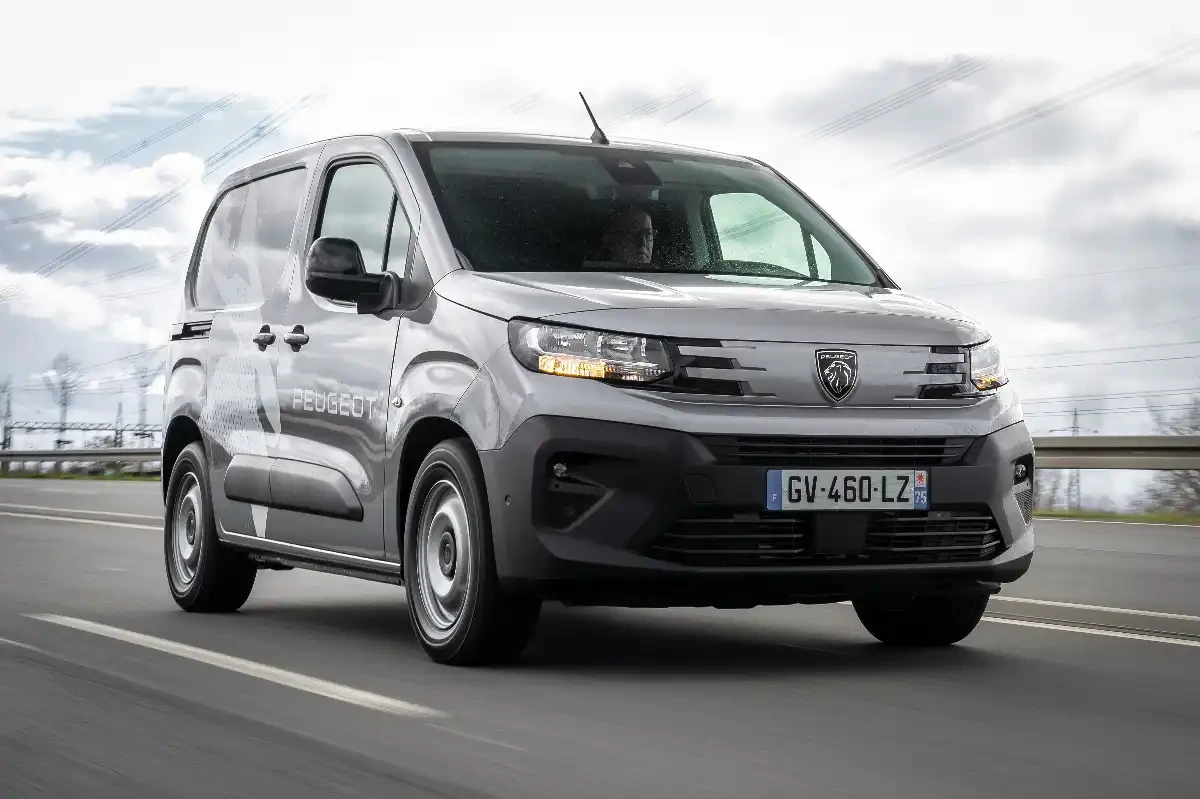
The 2025 PEUGEOT E-Partner is Peugeot Australia’s small electric workhorse: a long-wheelbase van with a 50 kWh battery, a claimed 258 km WLTP range and the kind of cabin tech you usually find in hatchbacks, not haulage. Small footprint, tight turning circle, and a motor with a healthy 260 Nm mean it feels more city runabout than courier mule, yet it still swallows serious cargo.
Pros and Cons
Pros
- Official 258 km WLTP range is enough for most metro delivery loops.
- 3.9 m³ load bay and 750 kg payload keep it useful when the batteries are full.
- Apple CarPlay/Android Auto on an 8-inch screen, plus Peugeot’s i-Cockpit layout, make long days less grim.
- Five-year/200,000 km vehicle warranty and eight-year/160,000 km battery coverage help the spreadsheet.
Cons
- Single spec only, so little wiggle room on price or options.
- Real-world energy use in Aussie testing sat around 18.4–20.4 kWh/100 km, so high-speed country runs will chew range faster.
- Towing is capped at 750 kg, so trailers are strictly light duty.
How Much Does It Cost?
Peugeot lists one trim for Australia: the 2025 PEUGEOT E-Partner Pro Long Auto at $59,990 before on-road costs. That is the sticker whether you are fleet or sole trader.
Features and Benefits
Under the floor sits a 50 kWh pack feeding a 100 kW motor. Torque is 260 Nm, which is generous for a van this size. Rapid DC charging at up to 100 kW will take you from empty to 80 percent in roughly half an hour, handy when the afternoon run pops up.
Inside, Peugeot gives you its compact steering wheel, digital instruments and that 8-inch touchscreen with Bluetooth, Apple CarPlay and Android Auto. The cabin only seats two, which actually frees up space for laptops, clipboards and the inevitable box of random fittings that follows every tradie.
Safety
Six airbags, Autonomous Emergency Braking, Lane Keep Assist, Stability Control and Speed Sign Recognition are all standard. A wide-view reversing camera helps when you are backing toward a loading dock in the rain.
Running Costs
Peugeot’s five-year service plan option and roadside assist take some sting out of maintenance. Energy use around 18-20 kWh/100 km means a typical 200 km day could cost under ten bucks if you are charging off-peak at roughly $0.25/kWh; your tariff will decide the final math, but electricity still beats diesel per kilometre for most fleets. DC top-ups are quick, but most owners will slow-charge overnight and start each morning full.
Comparison To Its Competitors
Renault’s Kangoo E-Tech landed here in 2024 at $61,990 before on-roads, with a 45 kWh battery and up to 285 km WLTP range, so it asks more money for slightly more range but less payload. LDV’s eDeliver 7 is bigger and starts around $59,990 for ABN holders, but it sits a size class up and feels more like a HiAce rival than a city van. If you need outright cube space or three seats, those vans make sense. If you live in laneways and underground car parks, the 2025 PEUGEOT E-Partner’s footprint is the friendlier compromise.
Conclusion
For Australian small-business operators who spend their days dodging scooters and speed humps, the 2025 PEUGEOT E-Partner hits the sweet spot: practical, quiet, cheap to juice, and not a punishment to sit in. The range will not suit interstate couriers and the lack of spec choice is annoying, yet as an urban electric van it feels thoughtfully dialled for the job.
Rating: 8/10
Strong package, fair price, usable range, but room for improvement in towing ability and variant choice.